
Better behavioral health outcomes, at a lower cost
States spend billions treating depression. For a lot of people, none of it works. Oregon spent the last three and a half years testing something different, and the results are strong. We help states turn that evidence into programs their residents can actually reach.
What the data shows
Some people with depression try one medication after another and never get better. Doctors call this treatment-resistant depression (TRD). It is one of the clearest cases for psilocybin therapy, because the treatments states already pay for are expensive and often do not work.
It is not the only case. Early research points to strong results for (insert 3 conditions we know are showing real promise). Treatment-resistant depression is simply where the evidence is strongest today, which is why we start there.
Psilocybin, by the numbers
People served in Oregon: 22,000+
Serious side effects: 0.15% of sessions
What this means for TRD patients
Cost for one person to recover with psilocybin therapy: ~$10,000
Cost for one person to recover with transcranial magnetic stimulation (TMS), a treatment the Oregon Health Plan already covers: ~$22,000
Data comes from the OPS Dashboard, Althea Data, TMS Cost Review, TMS Efficacy Review
How we help states
States are asking harder questions about psilocybin therapy than they were three years ago. We help them answer those questions with evidence.
Research and economics
We analyze what a program would cost a state and what it could save, using real-world data instead of projections.
Policy design
We help legislators and agencies draft workable legislation and rules when they ask for it.
Convening
We connect states to each other, and to the clinicians, researchers, and veterans who have already done this work.
Every state is different. We help each one

The Problem
Oregon keeps spending more on behavioral health. Its behavioral health budget reached $1.35B, with a new $130M allocated for rising claims costs.
The state’s 76,000 residents with depression carry a total economic cost of $760M, yearly.
The spending goes up, but the outcomes stay the same.
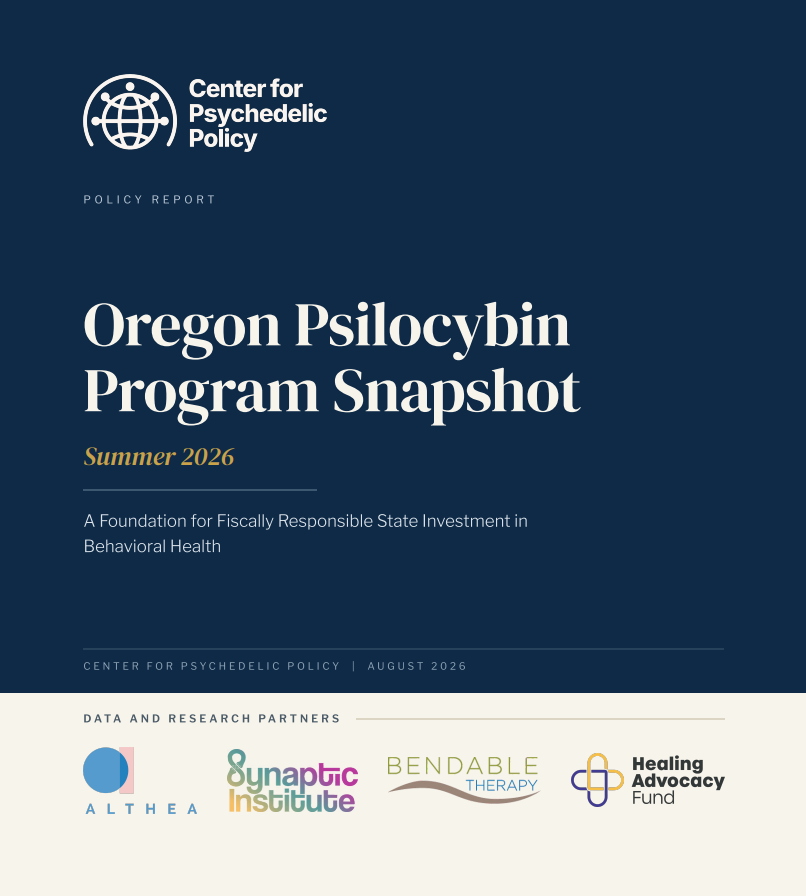
Take the deep dive into Oregon’s real-world data
Oregon's regulated program has three and a half years of real-world safety and outcome data. No other state has anything close. A proposed fee increase would shrink the program right when that evidence is most useful. What Oregon decides will shape how every other state weighs the cost of access.
Ground Game
The science on psychedelic therapy is accelerating, and policy is trying to catch up. Ground Game talks to the researchers, clinicians, and advocates working at that intersection, translating the momentum into something legislators, funders, and advocates can act on.
Looking for the national picture? The National Psychedelic Landscape Assessment tracks 220+ bills across 38 states and D.C.
Want to support state-funded access in your state?
We support legislators, state agencies, funders and advocates who want pragmatic, implementable models for affordable psychedelic care.
Reach out if you are:
Eager to fund state-specific pathways for psychedelic access
Developing policy options and implementation-ready language for affordable, regulated psychedelic services
Building a pilot program concept and budget framework that reduces out-of-pocket costs and clarifies operational roles
Requesting a nonpartisan briefing on lessons learned from Oregon and Colorado to inform program design and oversight